Specifications and Price
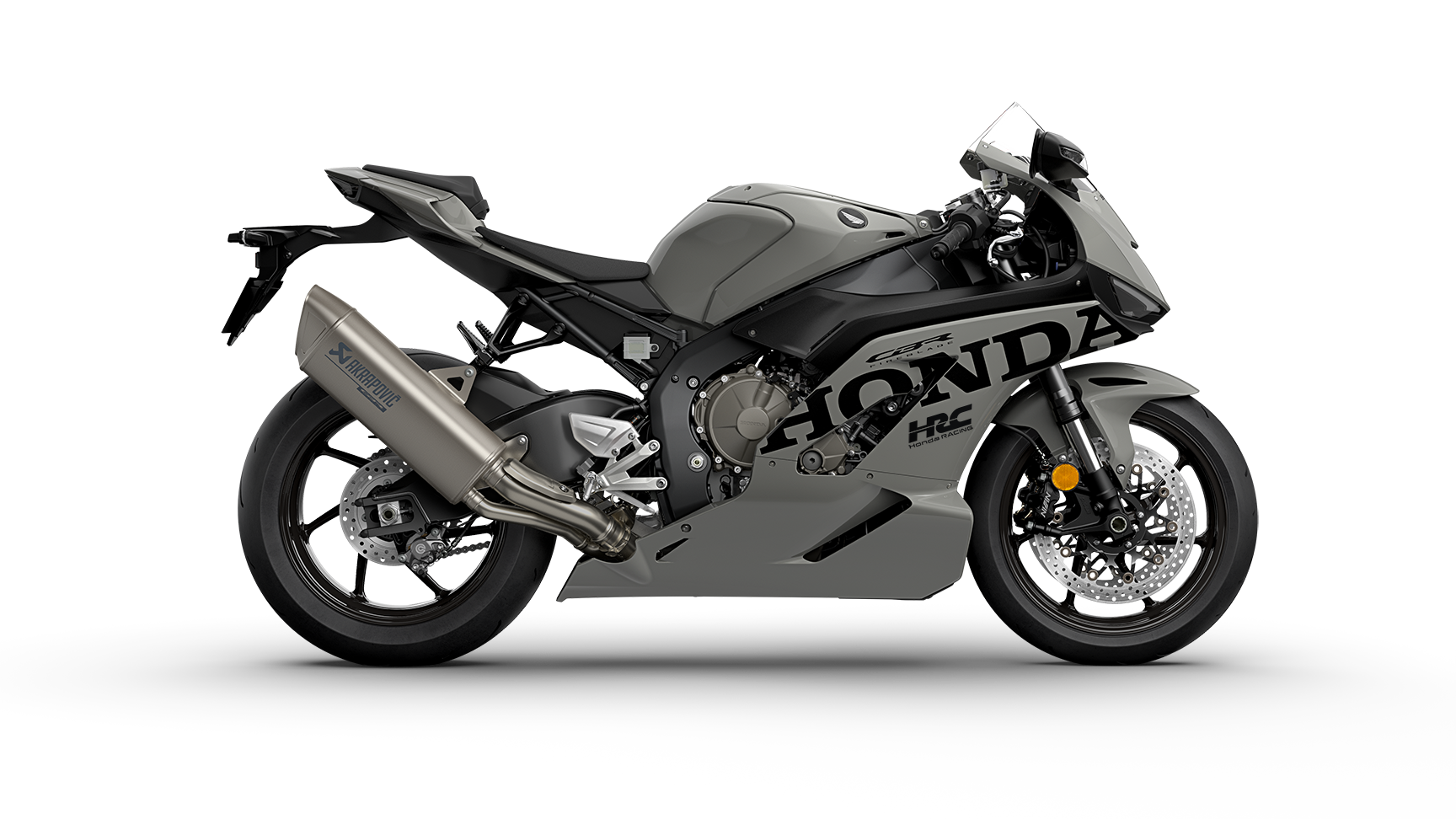
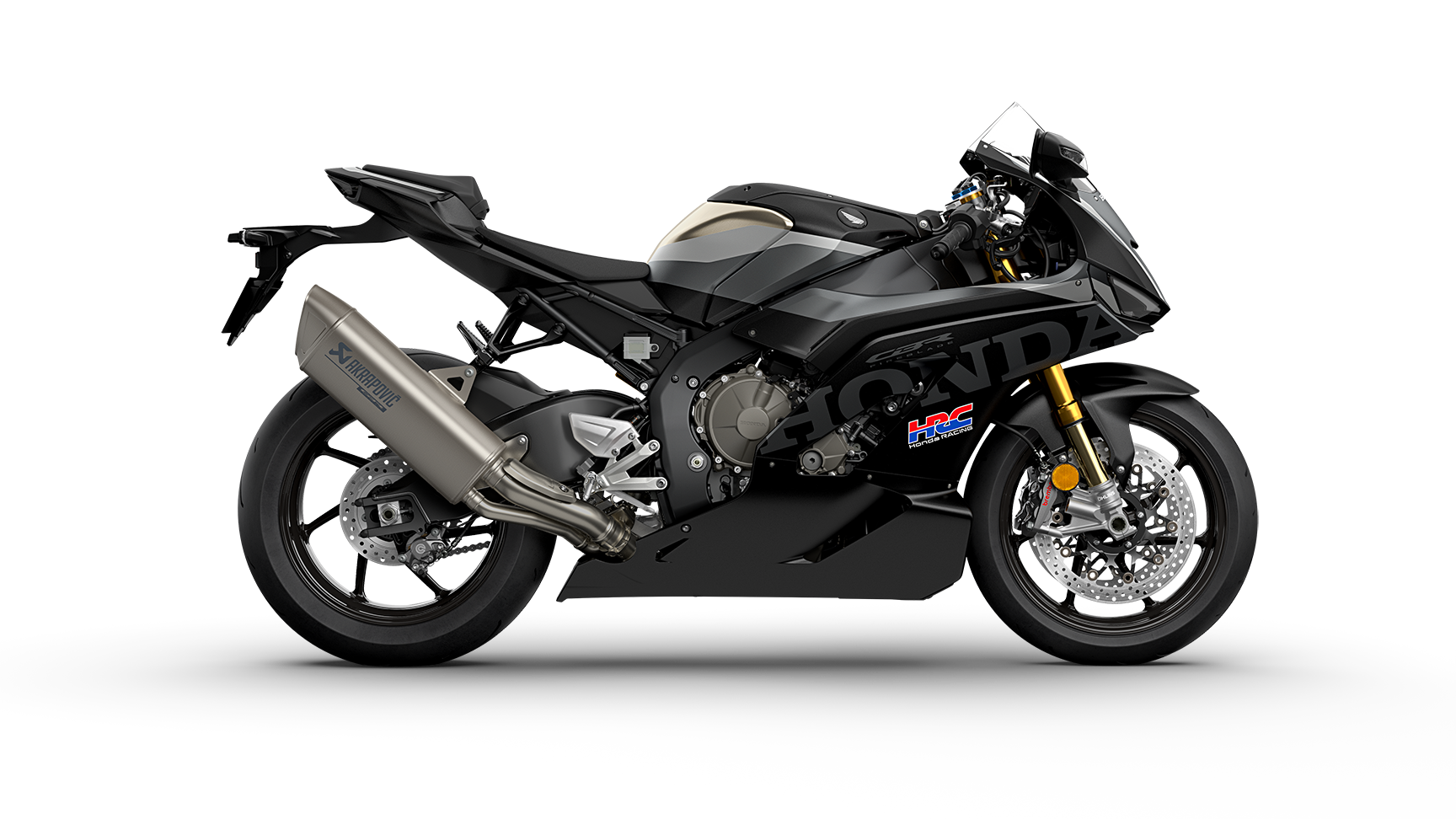
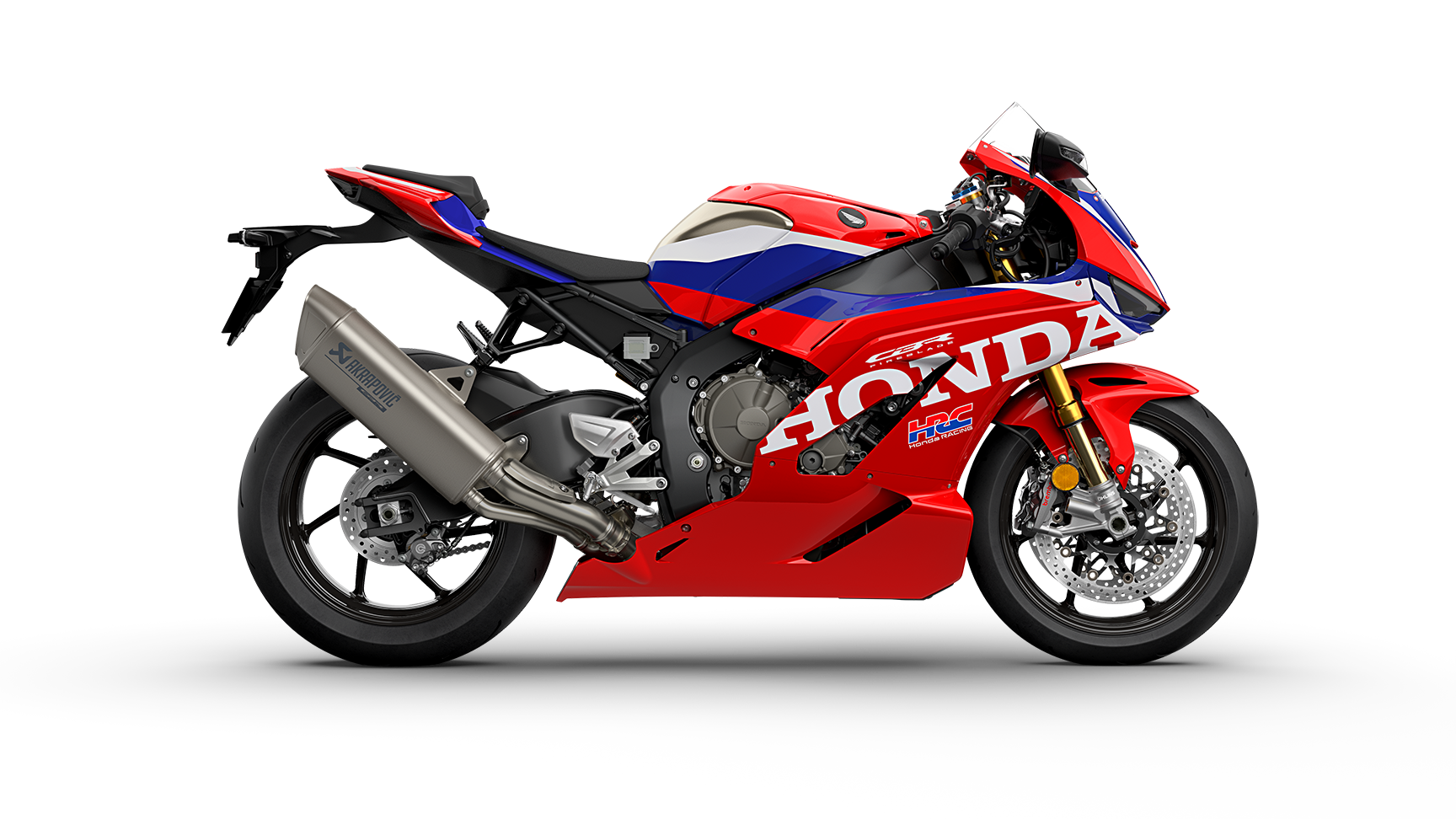
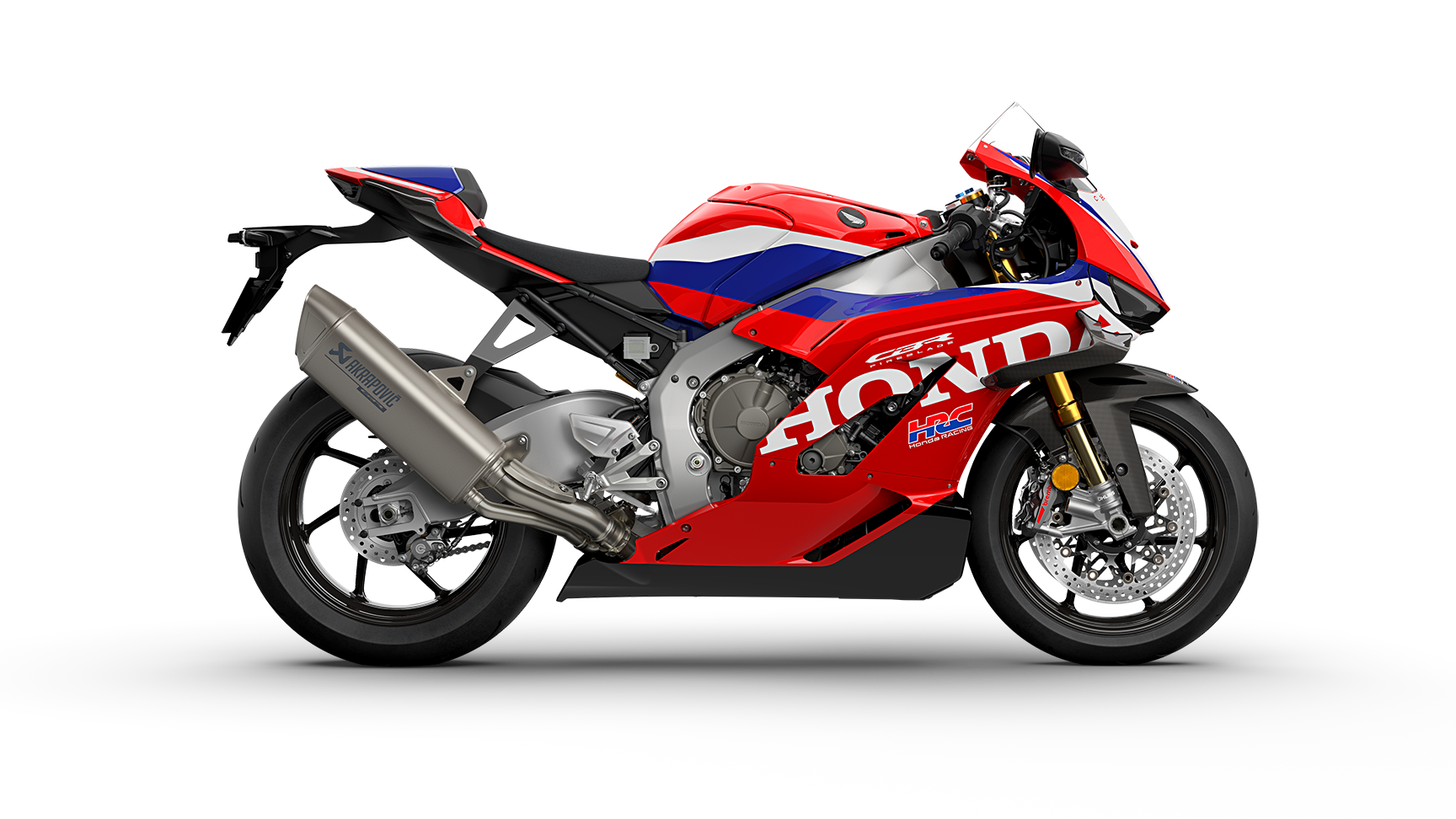


Specifications
CBR1000RR-R Fireblade 2027
Key Features
- Quickshifter Optional
- Transmission Type Manual
Engine
- Carburation PGM FI electronic fuel injection
- C02 Emissions (g/km) 155
- Cooling Type Liquid
- SOHC or DOHC DOHC
- Configuration Inline
- Number of Cylinders 4
- Number of Valves per cylinder 4
- Engine Displacement (cc) 1000
- Bore (mm) 81
- Stroke (mm) 48.5
- Compression Ratio (X:1) 13.8
- Max. Power Output (kW @ rpm) 159.5 kW @ 14,000
- Max. Torque (Nm @ rpm) 114 @ 10,500
- Stationary Noise Level (dB) TBC
- Max. Speed (km/h) 299
- Oil Capacity (L) 2.6
Wheels
- Wheel Dimension: Front 17M/C x MT3.50
- Wheel Dimension: Rear 17M/C x MT6.00
- Wheel Type Cast
- Tyres Front 120/70/ZR17
- Tyres Rear 200/55/ZR17
- Tyre Make / Type BRIDGESTONE BATTLAX RACING STREET RS12 / MICHELIN POWER GP2
Dimensions and Weights
- Fuel Tank Capacity (Litres) 16.6
- Fuel Consumption 6.7
Instruments and Electrics
- Meter Type TFT
- Meter Size (inches) 5
- Security System HISS (Honda Ignition Security System)
- Electronic Steering Lock (ESL) Yes
- Smart Key Yes
Additional Features
- Top Box Capacity (L) n/a
- Panniers Capacity (L) n/a
- Other Features Variable Intake Air Funnel
Drivertrain
- Clutch Type Wet Multiplate & Assisted Slipper
- Transmission Type Manual
- Number of Gears 6
- Final Drive Chain
- Quickshifter Optional
Brakes
- ABS Type Cornering ABS
- Turn Rear ABS off? (Y/N) Yes
- Front Brake Discs: number 2
- Front Brake Discs: size (mm) 330
- Front Brake Calipers: Type 4-piston radial mounted
- Front Brake Calipers: Make Nissin
Rider Aids
- Selectable Riding Modes (number and type) 3 (Race / Road / Rain)
- Rear Lift Control Yes
- IMU Yes
- Throttle-by-Wire (TBW) Yes
- Honda Selectable Torque Control (HSTC) Yes
- Launch Control Yes
- Wheelie Control Yes
- Honda Electronic Steering Damper (HESD) Yes
Lighting
- Headlight / Taillight LED / LED
- Battery Type AGM
- Battery Capacity (V / Ah) 12V/ 2.3Ah
- Daytime Running Lights (DRL) Yes
- Auto Cancelling Indicators Yes
- Emergency Stop Signal (ESS) Yes
Chassis
- Frame Type Twin Spar
- Frame Shape Diamond
- Frame Material Aluminium
- Frame Weight (kg) 9
- Dimensions: Length (mm) 2105
- Dimensions: Width (mm) 735
- Dimensions: Height (mm) 1150
- Wheelbase (mm) 1455
- Handlebar Height (mm) 826
- Seat Height (mm) 843
- Ground Clearance (mm) 130
- Caster Angle (degrees) 24
- Trail (mm) 101
- Turning radius (m) 3.8
- Kerb Weight (kg) 199
- Total Kerb Weight with Panniers (kg) n/a
- Maximum Laden Mass Weight (kg) 354
- Integrated Storage (L) n/a
Suspension
- Suspension Front: Type BPF USD
- Suspension Rear: Type Monoshock
- Suspension Front: Brand Showa
- Suspension Front: Fork Diameter (mm) 43
- Suspension Front: Stroke length (mm) 85
- Suspension Front: Travel length (mm) 125
- Suspension Front: Adjustment? Fully adjustable
- Suspension Rear: Brand Showa
- Suspension Rear: Stroke length (mm) 128
- Suspension Rear: Travel length (mm) 143
- Suspension Rear: Adjustment? Fully adjustable
- Swingarm Type Pro-Link
- Swingarm Material Aluminium
CBR1000RR-R Fireblade SP 2027
Key Features
- Quickshifter Yes
- Transmission Type Manual
Engine
- Carburation PGM FI electronic fuel injection
- C02 Emissions (g/km) 155
- Cooling Type Liquid
- SOHC or DOHC DOHC
- Configuration Inline
- Number of Cylinders 4
- Number of Valves per cylinder 4
- Engine Displacement (cc) 1000
- Bore (mm) 81
- Stroke (mm) 48.5
- Compression Ratio (X:1) 13.8
- Max. Power Output (kW @ rpm) 159.5 kW @ 14,000
- Max. Torque (Nm @ rpm) 114 @ 10,500
- Stationary Noise Level (dB) TBC
- Max. Speed (km/h) 299
- Oil Capacity (L) 2.6
Wheels
- Wheel Dimension: Front 17M/C x MT3.50
- Wheel Dimension: Rear 17M/C x MT6.00
- Wheel Type Cast
- Tyres Front 120/70/ZR17
- Tyres Rear 200/55/ZR17
- Tyre Make / Type BRIDGESTONE BATTLAX RACING STREET RS12 / MICHELIN POWER GP2
Dimensions and Weights
- Fuel Tank Capacity (Litres) 16.6
- Fuel Consumption 6.7
Instruments and Electrics
- Meter Type TFT
- Meter Size (inches) 5
- Security System HISS (Honda Ignition Security System)
- Electronic Steering Lock (ESL) Yes
- Smart Key Yes
Additional Features
- Top Box Capacity (L) n/a
- Panniers Capacity (L) n/a
- Other Features Variable Intake Air Funnel
Drivertrain
- Clutch Type Wet Multiplate & Assisted Slipper
- Transmission Type Manual
- Number of Gears 6
- Final Drive Chain
- Quickshifter Yes
Brakes
- ABS Type Cornering ABS
- Turn Rear ABS off? (Y/N) Yes
- Front Brake Discs: number 2
- Front Brake Discs: size (mm) 330
- Front Brake Calipers: Type 4-piston radial mounted
- Front Brake Calipers: Make Brembo Hypure
Rider Aids
- Selectable Riding Modes (number and type) 3 (Race / Road / Rain)
- Rear Lift Control Yes
- IMU Yes
- Throttle-by-Wire (TBW) Yes
- Honda Selectable Torque Control (HSTC) Yes
- Launch Control Yes
- Wheelie Control Yes
- Honda Electronic Steering Damper (HESD) Yes
Lighting
- Headlight / Taillight LED / LED
- Battery Type AGM
- Battery Capacity (V / Ah) 12V/ 2.3Ah
- Daytime Running Lights (DRL) Yes
- Auto Cancelling Indicators Yes
- Emergency Stop Signal (ESS) Yes
Chassis
- Frame Type Twin Spar
- Frame Shape Diamond
- Frame Material Aluminium
- Frame Weight (kg) 9
- Dimensions: Length (mm) 2105
- Dimensions: Width (mm) 735
- Dimensions: Height (mm) 1150
- Wheelbase (mm) 1450
- Handlebar Height (mm) 830
- Seat Height (mm) 843
- Ground Clearance (mm) 130
- Caster Angle (degrees) 24
- Trail (mm) 101
- Turning radius (m) 3.8
- Kerb Weight (kg) 201
- Total Kerb Weight with Panniers (kg) n/a
- Maximum Laden Mass Weight (kg) 356
- Integrated Storage (L) n/a
Suspension
- Suspension Front: Type NPX S-EC (E-SUSPENSION) USD
- Suspension Rear: Type Monoshock
- Suspension Front: Brand Ohlins
- Suspension Front: Fork Diameter (mm) 43
- Suspension Front: Stroke length (mm) 90
- Suspension Front: Travel length (mm) 125
- Suspension Front: Adjustment? EERA with manual pre-load
- Suspension Rear: Brand Ohlins TTX36 S-EC (E-SUSPENSION)
- Suspension Rear: Stroke length (mm) 126
- Suspension Rear: Travel length (mm) 143
- Suspension Rear: Adjustment? EERA with manual pre-load
- Swingarm Type Pro-Link
- Swingarm Material Aluminium
CBR1000RR-R Fireblade HRC Works Edition 2027
Key Features
- Quickshifter Yes
- Transmission Type Manual
Engine
- Carburation PGM FI electronic fuel injection
- C02 Emissions (g/km) 155
- Cooling Type Liquid
- SOHC or DOHC DOHC
- Configuration Inline
- Number of Cylinders 4
- Number of Valves per cylinder 4
- Engine Displacement (cc) 1000
- Bore (mm) 81
- Stroke (mm) 48.5
- Compression Ratio (X:1) 13.8
- Max. Power Output (kW @ rpm) 159.5 kW @ 14,000
- Max. Torque (Nm @ rpm) 114 @ 10,500
- Stationary Noise Level (dB) TBC
- Max. Speed (km/h) 299
- Oil Capacity (L) 2.6
Wheels
- Wheel Dimension: Front 17M/C x MT3.50
- Wheel Dimension: Rear 17M/C x MT6.00
- Wheel Type Cast
- Tyres Front 120/70/ZR17
- Tyres Rear 200/55/ZR17
- Tyre Make / Type BRIDGESTONE BATTLAX RACING STREET RS12 / MICHELIN POWER GP2
Dimensions and Weights
- Fuel Tank Capacity (Litres) 16.6
- Fuel Consumption 6.7
Instruments and Electrics
- Meter Type TFT
- Meter Size (inches) 5
- Security System HISS (Honda Ignition Security System)
- Electronic Steering Lock (ESL) Yes
- Smart Key Yes
Additional Features
- Top Box Capacity (L) n/a
- Panniers Capacity (L) n/a
- Other Features - Bottom-Neutral Race Shift System - Variable Intake Air Funnel
Drivertrain
- Clutch Type Wet Multiplate & Assisted Slipper
- Transmission Type Manual
- Number of Gears 6
- Final Drive Chain
- Quickshifter Yes
Brakes
- ABS Type Cornering ABS
- Turn Rear ABS off? (Y/N) Yes
- Front Brake Discs: number 2
- Front Brake Discs: size (mm) 330
- Front Brake Calipers: Type 4-piston radial mounted
- Front Brake Calipers: Make Brembo Hypure Sports
Rider Aids
- Selectable Riding Modes (number and type) 3 (Race / Road / Rain)
- Rear Lift Control Yes
- IMU Yes
- Throttle-by-Wire (TBW) Yes
- Honda Selectable Torque Control (HSTC) Yes
- Launch Control Yes
- Wheelie Control Yes
- Honda Electronic Steering Damper (HESD) Yes
Lighting
- Headlight / Taillight LED / LED
- Battery Type AGM
- Battery Capacity (V / Ah) 12V/ 2.3Ah
- Daytime Running Lights (DRL) Yes
- Auto Cancelling Indicators Yes
- Emergency Stop Signal (ESS) Yes
Chassis
- Frame Type Twin Spar
- Frame Shape Diamond
- Frame Material Aluminium
- Frame Weight (kg) 9
- Dimensions: Length (mm) 2105
- Dimensions: Width (mm) 750
- Dimensions: Height (mm) 1150
- Wheelbase (mm) 1450
- Handlebar Height (mm) 830
- Seat Height (mm) 847
- Ground Clearance (mm) 135
- Caster Angle (degrees) 23.8
- Trail (mm) 99.8
- Turning radius (m) 3.8
- Kerb Weight (kg) 200
- Total Kerb Weight with Panniers (kg) n/a
- Maximum Laden Mass Weight (kg) 305
- Integrated Storage (L) n/a
Suspension
- Suspension Front: Type NPX USD
- Suspension Rear: Type Monoshock
- Suspension Front: Brand Ohlins
- Suspension Front: Fork Diameter (mm) 43
- Suspension Front: Stroke length (mm) 90
- Suspension Front: Travel length (mm) 125
- Suspension Front: Adjustment? Fully adjustable
- Suspension Rear: Brand Ohlins TTX36
- Suspension Rear: Stroke length (mm) 126
- Suspension Rear: Travel length (mm) 143
- Suspension Rear: Adjustment? Fully adjustable
- Swingarm Type Pro-Link
- Swingarm Material Aluminium
CBR1000RR-R Fireblade SP
Key Features
- 12V Socket Optional (USB)
- Quickshifter Yes
- Transmission Type Manual Transmission
Engine
- Carburation PGM-FI
- C02 Emissions (g/km) 155 g/km
- Engine Displacement (cc) 999.9cc
- Compression Ratio (X:1) 13.6:1
- Max. Power Output (kW @ rpm) 160kW/14,000rpm
- Max. Torque (Nm @ rpm) 113Nm/12,000rpm
- Stationary Noise Level (dB) 77dB
- Oil Capacity (L) 4L
- Bore × Stroke (mm) 81mm x 48.5mm
- Engine Type water-cooled, 4-stroke, DOHC, inline 4-cylinder
- Starter Electric
- Throttle Bore 52mm
Wheels
- Tyres Front PIRE:DIABLO SUPERCORSA SP (V3) BS:RS11
- Tyres Rear PIRE:DIABLO SUPERCORSA SP (V3) BS:RS11
- Brakes Front 330mm disc with radial-mount Brembo Stylema R 4-piston caliper
- Brakes Rear 220mm disc with Brembo 2-Piston caliper
- Tyre Size Front 120/70-ZR17
- Tyre Size Rear 200/55-ZR17
- Wheels Front 17inch 3.5
- Wheels Rear 17inch 6.0
Dimensions and Weights
- Fuel Tank Capacity (Litres) 16.5L
- Fuel Consumption 14.9km/L (6.7L/100km)
- Dimensions (L×W×H) (mm) 2,100mm x 745mm x 1,140mm
Transmission
- Clutch Operation Cable
- Gearbox 6-speed
Instruments and Electrics
- USB socket Optional
- 12V Socket Optional (USB)
- Security System Smart Key
- Ignition System Electronic, digital transistor
- Instruments TFT full color
- Tail Light LED
Key Features
- Engine 1000cc DOHC Inline Four-Cylinder Engine
- Throttle by Wire Unique Separate Control Two Motor Throttle By Wire
- Winglets New Winglet Aerodynamics
- Swingarm RC213V-S Derived Aluminium Swingarm
- Exhaust Akrapovič Titanium Muffler
Drivertrain
- Clutch Type Wet, multiplate hydraulic clutch
- Transmission Type Manual Transmission
- Final Drive Chain
- Quickshifter Yes
Brakes
- ABS Type 2 channel with IMU
Rider Aids
- IMU 6-Axis Inertial Measurement Unit
Lighting
- Headlight / Taillight LED
- Battery Capacity (V / Ah) 12V-2Ah HY85S Li-ion
Chassis
- Frame Type AL TWIN-TUBE
- Wheelbase (mm) 1455mm
- Seat Height (mm) 830mm
- Ground Clearance (mm) 115mm
- Caster Angle (degrees) 24°
- Trail (mm) 102mm
- Kerb Weight (kg) 201kg
Suspension
- Suspension Front: Type Ohlins NPX S-EC3.0 43mm telescopic fork with preload, compression and rebound adjustments, 125mm stroke.
- Suspension Rear: Type Ohlins TTX36 S-EC3.0 Pro-Link swingarm with preload, compression and rebound damping, 143mm stroke.
Built for Joy, Backed by Tech
Discover the technology and rider aids driving Honda’s performance, safety and control.
- Fireblade
- Fireblade SP
- Fireblade HRC Works Edition

HSTC Honda Selectable Torque Control
Honda Selectable Torque Control (HSTC) is a system that detects rear wheel spin and electronically adjusts engine torque to ensure traction and stable handling characteristics are maintained. On some models, the levels of HSTC intervention can be adjusted to suit rider preference and riding conditions. The levels of HSTC also form part of the selectable riding modes.

Selectable levels of ABS
On some of Honda's super sport models, the rider is able to select levels of ABS intervention to suit the riding conditions i.e. race circuit use.

HISS Honda Ignition Security System
Honda Ignition Security System (HISS) is a motorcycle immobiliser system that has a microchip embedded in the original key and is programmed with a coded password that is picked up by an antenna and communicated it to an ECU. The ECU checks the programmed code number and only allows the engine to start when the code numbers match. Even if a duplicate key of exactly the same shape as the original key is used, the engine cannot be started unless the built-in microchip code matches.

Honda Smart Key
Honda Smart Key brings the convenience of keyless entry to the motorcycle world. This system improves security and convenience as the rider can keep the key fob in their pocket whilst operating the motorcycle.

Self-cancelling direction indicators
Self cancelling direction indicators improve safety by automatically switching off the direction indicators after the turning manoeuvre is complete.
ESL Electronic Steering Lock
As part of the Honda Smart Key system, this function is activated through the main switch and enables locking the steering when parked for maximum security.

Cornering lights
The cornering headlight function is controlled by lean angle information from the Inertial Measurement Unit (IMU). As the bike is leaned into a corner the inside cornering light is switched on to increase the illumination around the corner and improve visibility.

HESD Honda Electronic Steering Damper
Honda Electronic Steering Damper (HESD) provides electronically controlled steering damping that adjusts automatically according to vehicle speed. The system can increase the damping effect at higher speeds to ensure stability and reduce damping at lower speed to maintain agile handling characteristics and manoeuvrability.

Manual Transmission
Honda motorcycles using manual transmission are equipped with 5 or 6 speed constant-mesh transmission. The drive and driven gears are always mated together but rotate freely on a gear shaft until locked by a toothed sliding collar. This ensures smooth and sequential gear changing.

Unit Pro-link
The Unit Pro-Link design features the rear suspension damper housed entirely within the swingarm, and the damper is positioned lower than in a conventional design. Both contribute to improved mass centralisation.

Rear wheel lift control
Rear wheel lift control is another system integrated into the latest ABS systems. Using information from the wheel speed sensors and/or Inertial Measurement Unit (IMU) it controls braking pressure to supress rear wheel lift during hard or sudden braking conditions. This enables the rider to maintain control and ensure balanced and efficient braking.

ESS Emergency Stop Signal
Emergency Stop Signal ESS is a safety system that alerts road users that the motorcycle is in an emergency braking situation by flashing the direction indicators during hard or sudden braking.

Selectable riding modes
Selectable riding modes enable the rider to select pre-set and customisable user modes. These modes alter the levels of power delivery, HSTC and engine braking to suit the rider preference or riding conditions.

6-Axis IMU
The 6-axis Inertial Measurement Unit (IMU) enables precise measurement of the angle and rate of the motorcycle acceleration for yaw, roll and pitch. This enables the use of rider aid and safety systems such as cornering ABS and rear wheel lift control.

TFT screen
Thin Film Transistor (TFT) technology is now integrated into the meter on many of the Honda motorcycle and scooter range. This type of colour display provides clear and concise user information and integrates touch screen technology on some models.

LED Headlights
LED lights use Light Emitting Diode Technology to provide clear and intensive lighting to improve visibility and visual presence as well as benefiting from their low consumption properties.

2-Motor Throttle Body TBW
The two-motor TBW system (introduced on the 2024 CBR1000RR-R models) uses two motors attached to individual pairs of throttle valves. This enables opening and closing of the pairs of throttle valves independently for more precisely controlled power and torque delivery and control of engine braking.

DLC Diamond-Like Coating
Some of the Honda super sport models are fitted with Diamond-Like Carbon (DLC) coated camshafts. This coating technology has a low coefficient of friction and has been adopted directly from the RC213V-S. It reduces the valve train losses caused by friction. The reduction of friction between the component surfaces ensure improved efficiency and durability of the valve train components.

Semi Gear driven camshafts
The semi-cam gear train system uses both a cam chain and an additional idle gear to drive the camshafts. The idle gear is driven directly from the crankshaft and reduces the cam chain length required, this in turn enables higher levels of engine RPM and torque to be obtained. Additionally it also reduces the risk of chain deflection, and maintains cam to crank synchronicity and chain durability at higher RPM.

DSFI Dual Sequential Fuel Injection
Dual Sequential Fuel Injection (DSFI) features an additional set of fuel injectors located upstream of the inlet tracts. These injectors operate at higher RPM to increase the fuel air volume and optimise torque and power delivery.

Daytime Running Lights
Daytime running lights improve safety by increasing visibility and the overall visual presence of the motorcycle.

Anti-wheelie system
Anti-wheelie is a system that mitigates and reduces front wheel lift during hard and sudden acceleration. It utilises information from the ABS system and operates via the Throttle By Wire and HSTC systems to reduce engine torque and supress front wheel lift. On some models the levels of wheelie control can be adjusted via the meter.
Launch Control
Launch Control manages power and torque output during hard acceleration from a standing start to maximize grip and prevent the bike lifting or wheel spin.
Wheelie Control
Wheelie control limits how high the front wheel lifts off the ground during hard acceleration, maintaining steering control and maximum forward momentum.
Engine Brake Management
Engine brake management controls the speed the engine slows down when you let go of the throttle.

SFF-BP Separate Function Fork – Big Piston front forks
Separate Function Fork - Big Piston front forks separate spring damping function of each fork leg to ensure balanced and optimised damping control. The big-piston damper design provides linear suspension movement, even at the beginning of the suspension stroke.
HSTC Honda Selectable Torque Control
Honda Selectable Torque Control (HSTC) is a system that detects rear wheel spin and electronically adjusts engine torque to ensure traction and stable handling characteristics are maintained. On some models, the levels of HSTC intervention can be adjusted to suit rider preference and riding conditions. The levels of HSTC also form part of the selectable riding modes.
Selectable levels of ABS
On some of Honda's super sport models, the rider is able to select levels of ABS intervention to suit the riding conditions i.e. race circuit use.
HISS Honda Ignition Security System
Honda Ignition Security System (HISS) is a motorcycle immobiliser system that has a microchip embedded in the original key and is programmed with a coded password that is picked up by an antenna and communicated it to an ECU. The ECU checks the programmed code number and only allows the engine to start when the code numbers match. Even if a duplicate key of exactly the same shape as the original key is used, the engine cannot be started unless the built-in microchip code matches.
Honda Smart Key
Honda Smart Key brings the convenience of keyless entry to the motorcycle world. This system improves security and convenience as the rider can keep the key fob in their pocket whilst operating the motorcycle.
Self-cancelling direction indicators
Self cancelling direction indicators improve safety by automatically switching off the direction indicators after the turning manoeuvre is complete.
ESL Electronic Steering Lock
As part of the Honda Smart Key system, this function is activated through the main switch and enables locking the steering when parked for maximum security.
Cornering lights
The cornering headlight function is controlled by lean angle information from the Inertial Measurement Unit (IMU). As the bike is leaned into a corner the inside cornering light is switched on to increase the illumination around the corner and improve visibility.
HESD Honda Electronic Steering Damper
Honda Electronic Steering Damper (HESD) provides electronically controlled steering damping that adjusts automatically according to vehicle speed. The system can increase the damping effect at higher speeds to ensure stability and reduce damping at lower speed to maintain agile handling characteristics and manoeuvrability.
Manual Transmission
Honda motorcycles using manual transmission are equipped with 5 or 6 speed constant-mesh transmission. The drive and driven gears are always mated together but rotate freely on a gear shaft until locked by a toothed sliding collar. This ensures smooth and sequential gear changing.
Unit Pro-link
The Unit Pro-Link design features the rear suspension damper housed entirely within the swingarm, and the damper is positioned lower than in a conventional design. Both contribute to improved mass centralisation.
Rear wheel lift control
Rear wheel lift control is another system integrated into the latest ABS systems. Using information from the wheel speed sensors and/or Inertial Measurement Unit (IMU) it controls braking pressure to supress rear wheel lift during hard or sudden braking conditions. This enables the rider to maintain control and ensure balanced and efficient braking.
ESS Emergency Stop Signal
Emergency Stop Signal ESS is a safety system that alerts road users that the motorcycle is in an emergency braking situation by flashing the direction indicators during hard or sudden braking.
Selectable riding modes
Selectable riding modes enable the rider to select pre-set and customisable user modes. These modes alter the levels of power delivery, HSTC and engine braking to suit the rider preference or riding conditions.
6-Axis IMU
The 6-axis Inertial Measurement Unit (IMU) enables precise measurement of the angle and rate of the motorcycle acceleration for yaw, roll and pitch. This enables the use of rider aid and safety systems such as cornering ABS and rear wheel lift control.
TFT screen
Thin Film Transistor (TFT) technology is now integrated into the meter on many of the Honda motorcycle and scooter range. This type of colour display provides clear and concise user information and integrates touch screen technology on some models.
LED Headlights
LED lights use Light Emitting Diode Technology to provide clear and intensive lighting to improve visibility and visual presence as well as benefiting from their low consumption properties.
2-Motor Throttle Body TBW
The two-motor TBW system (introduced on the 2024 CBR1000RR-R models) uses two motors attached to individual pairs of throttle valves. This enables opening and closing of the pairs of throttle valves independently for more precisely controlled power and torque delivery and control of engine braking.
DLC Diamond-Like Coating
Some of the Honda super sport models are fitted with Diamond-Like Carbon (DLC) coated camshafts. This coating technology has a low coefficient of friction and has been adopted directly from the RC213V-S. It reduces the valve train losses caused by friction. The reduction of friction between the component surfaces ensure improved efficiency and durability of the valve train components.
Semi Gear driven camshafts
The semi-cam gear train system uses both a cam chain and an additional idle gear to drive the camshafts. The idle gear is driven directly from the crankshaft and reduces the cam chain length required, this in turn enables higher levels of engine RPM and torque to be obtained. Additionally it also reduces the risk of chain deflection, and maintains cam to crank synchronicity and chain durability at higher RPM.
DSFI Dual Sequential Fuel Injection
Dual Sequential Fuel Injection (DSFI) features an additional set of fuel injectors located upstream of the inlet tracts. These injectors operate at higher RPM to increase the fuel air volume and optimise torque and power delivery.
Daytime Running Lights
Daytime running lights improve safety by increasing visibility and the overall visual presence of the motorcycle.
Anti-wheelie system
Anti-wheelie is a system that mitigates and reduces front wheel lift during hard and sudden acceleration. It utilises information from the ABS system and operates via the Throttle By Wire and HSTC systems to reduce engine torque and supress front wheel lift. On some models the levels of wheelie control can be adjusted via the meter.
Launch Control
Launch Control manages power and torque output during hard acceleration from a standing start to maximize grip and prevent the bike lifting or wheel spin.
Wheelie Control
Wheelie control limits how high the front wheel lifts off the ground during hard acceleration, maintaining steering control and maximum forward momentum.
Engine Brake Management
Engine brake management controls the speed the engine slows down when you let go of the throttle.

Electronic suspension
The electronic suspension system actively adjusts damping characteristics to suit the riding conditions. On some of the adventure and tourer models the rider is able to use the meter to select if a pillion and or luggage is being carried, the system then automatically adjusts the damping to suit.

Selectable quick shifter with auto blip
With this system the reaction of the quick shifter can be adjusted by the rider via the meter, this alters the shifting responsiveness and feel. The auto blip function automatically blips the engine to raise RPM to the optimum amount for smooth and seamless downshifts.
HSTC Honda Selectable Torque Control
Honda Selectable Torque Control (HSTC) is a system that detects rear wheel spin and electronically adjusts engine torque to ensure traction and stable handling characteristics are maintained. On some models, the levels of HSTC intervention can be adjusted to suit rider preference and riding conditions. The levels of HSTC also form part of the selectable riding modes.
Selectable levels of ABS
On some of Honda's super sport models, the rider is able to select levels of ABS intervention to suit the riding conditions i.e. race circuit use.
HISS Honda Ignition Security System
Honda Ignition Security System (HISS) is a motorcycle immobiliser system that has a microchip embedded in the original key and is programmed with a coded password that is picked up by an antenna and communicated it to an ECU. The ECU checks the programmed code number and only allows the engine to start when the code numbers match. Even if a duplicate key of exactly the same shape as the original key is used, the engine cannot be started unless the built-in microchip code matches.
Honda Smart Key
Honda Smart Key brings the convenience of keyless entry to the motorcycle world. This system improves security and convenience as the rider can keep the key fob in their pocket whilst operating the motorcycle.
Self-cancelling direction indicators
Self cancelling direction indicators improve safety by automatically switching off the direction indicators after the turning manoeuvre is complete.
ESL Electronic Steering Lock
As part of the Honda Smart Key system, this function is activated through the main switch and enables locking the steering when parked for maximum security.
Cornering lights
The cornering headlight function is controlled by lean angle information from the Inertial Measurement Unit (IMU). As the bike is leaned into a corner the inside cornering light is switched on to increase the illumination around the corner and improve visibility.
HESD Honda Electronic Steering Damper
Honda Electronic Steering Damper (HESD) provides electronically controlled steering damping that adjusts automatically according to vehicle speed. The system can increase the damping effect at higher speeds to ensure stability and reduce damping at lower speed to maintain agile handling characteristics and manoeuvrability.
Manual Transmission
Honda motorcycles using manual transmission are equipped with 5 or 6 speed constant-mesh transmission. The drive and driven gears are always mated together but rotate freely on a gear shaft until locked by a toothed sliding collar. This ensures smooth and sequential gear changing.
Unit Pro-link
The Unit Pro-Link design features the rear suspension damper housed entirely within the swingarm, and the damper is positioned lower than in a conventional design. Both contribute to improved mass centralisation.
Rear wheel lift control
Rear wheel lift control is another system integrated into the latest ABS systems. Using information from the wheel speed sensors and/or Inertial Measurement Unit (IMU) it controls braking pressure to supress rear wheel lift during hard or sudden braking conditions. This enables the rider to maintain control and ensure balanced and efficient braking.
ESS Emergency Stop Signal
Emergency Stop Signal ESS is a safety system that alerts road users that the motorcycle is in an emergency braking situation by flashing the direction indicators during hard or sudden braking.
Selectable riding modes
Selectable riding modes enable the rider to select pre-set and customisable user modes. These modes alter the levels of power delivery, HSTC and engine braking to suit the rider preference or riding conditions.
6-Axis IMU
The 6-axis Inertial Measurement Unit (IMU) enables precise measurement of the angle and rate of the motorcycle acceleration for yaw, roll and pitch. This enables the use of rider aid and safety systems such as cornering ABS and rear wheel lift control.
TFT screen
Thin Film Transistor (TFT) technology is now integrated into the meter on many of the Honda motorcycle and scooter range. This type of colour display provides clear and concise user information and integrates touch screen technology on some models.
LED Headlights
LED lights use Light Emitting Diode Technology to provide clear and intensive lighting to improve visibility and visual presence as well as benefiting from their low consumption properties.
2-Motor Throttle Body TBW
The two-motor TBW system (introduced on the 2024 CBR1000RR-R models) uses two motors attached to individual pairs of throttle valves. This enables opening and closing of the pairs of throttle valves independently for more precisely controlled power and torque delivery and control of engine braking.
DLC Diamond-Like Coating
Some of the Honda super sport models are fitted with Diamond-Like Carbon (DLC) coated camshafts. This coating technology has a low coefficient of friction and has been adopted directly from the RC213V-S. It reduces the valve train losses caused by friction. The reduction of friction between the component surfaces ensure improved efficiency and durability of the valve train components.
Semi Gear driven camshafts
The semi-cam gear train system uses both a cam chain and an additional idle gear to drive the camshafts. The idle gear is driven directly from the crankshaft and reduces the cam chain length required, this in turn enables higher levels of engine RPM and torque to be obtained. Additionally it also reduces the risk of chain deflection, and maintains cam to crank synchronicity and chain durability at higher RPM.
DSFI Dual Sequential Fuel Injection
Dual Sequential Fuel Injection (DSFI) features an additional set of fuel injectors located upstream of the inlet tracts. These injectors operate at higher RPM to increase the fuel air volume and optimise torque and power delivery.
Daytime Running Lights
Daytime running lights improve safety by increasing visibility and the overall visual presence of the motorcycle.
Anti-wheelie system
Anti-wheelie is a system that mitigates and reduces front wheel lift during hard and sudden acceleration. It utilises information from the ABS system and operates via the Throttle By Wire and HSTC systems to reduce engine torque and supress front wheel lift. On some models the levels of wheelie control can be adjusted via the meter.
Launch Control
Launch Control manages power and torque output during hard acceleration from a standing start to maximize grip and prevent the bike lifting or wheel spin.
Wheelie Control
Wheelie control limits how high the front wheel lifts off the ground during hard acceleration, maintaining steering control and maximum forward momentum.
Engine Brake Management
Engine brake management controls the speed the engine slows down when you let go of the throttle.
Selectable quick shifter with auto blip
With this system the reaction of the quick shifter can be adjusted by the rider via the meter, this alters the shifting responsiveness and feel. The auto blip function automatically blips the engine to raise RPM to the optimum amount for smooth and seamless downshifts.
All specifications are provisional and subject to change without notice.
Figures provided are results obtained by Honda under standardised testing conditions prescribed by WMTC. Tests are conducted on a rolling road using a standard version of the vehicle with only one rider and no additional optional equipment. Actual fuel consumption may vary depending on how you ride, how you maintain your vehicle, weather, road conditions, tire pressure, installation of accessories, cargo, rider and passenger weight, and other factors.
