


Understanding electrified vehicles can feel complex at first, particularly when similar terms are used to describe different technologies. Plug-in hybrid electric vehicles, often referred to as PHEVs, combine elements of electric and petrol driving, sitting between conventional hybrids and fully electric cars.
Learn more about the CR-V e:PHEVWhat is a e:PHEV?
e:PHEV stands for Plug-in Hybrid Electric Vehicle. A e:PHEV combines a petrol engine with a rechargeable electric battery, allowing the vehicle to operate using electric power, petrol power, or a combination of both.
For many everyday journeys, a e:PHEV can drive using electric power alone. When the battery charge is reduced or additional power is required, the petrol engine supports the system. This allows longer journeys to continue without the need to stop and recharge, offering flexibility across different driving patterns.
Learn more about hybrid vehicles
Plug-in hybrid power, effortless efficiency
As a plug-in hybrid, the CR-V e:PHEV can run solely on electric power, delivering instant acceleration. Its e:PHEV technology seamlessly switches modes to maximise performance and efficiency.
- Charging
- Electric
- Hybrid
- Engine
- Braking
Charging
Recharge by plugging in, enabling electric‑only driving when you want it most.
Electric drive
Driven by the battery alone, like an electric vehicle.
Hybrid drive
Driven by two electric motors, powered by the petrol engine for high efficiency.
Engine drive
Driven by the petrol engine alone, for sustained high-speed cruising.
Regenerative braking
Tops up the EV battery on the go with no need to plug in.
How does a plug-in hybrid work?
A plug-in hybrid uses an electric motor and a petrol engine to drive the wheels. The system automatically manages how these power sources are used, depending on speed, driving conditions, and battery charge.
At lower speeds or during lighter driving, such as in urban environments, the electric motor often provides the power. At higher speeds or when stronger acceleration is needed, the petrol engine supports the system. These transitions happen automatically, so the driver does not need to manage modes manually.
Plug-in hybrids also use regenerative braking. When slowing down or braking, energy that would otherwise be lost is recovered and stored in the battery. This helps maintain battery charge during everyday driving.
How do you charge a e:PHEV?
e:PHEVs offer flexibility when it comes to charging. Drivers can charge at home using a standard domestic socket or a dedicated wall-mounted charger, as well as at public charging points.
How often charging is needed depends on your daily routine and/or individual driving habits. Some drivers choose to charge regularly to maximise electric driving for short trips, while others rely more on the petrol engine and charge less frequently. If the battery charge is low, the vehicle continues to operate using petrol power, so journeys can continue without interruption.
Regenerative braking also contributes to recharging the battery during driving, helping to recover energy lost during deceleration.
Learn more about hybrid car charging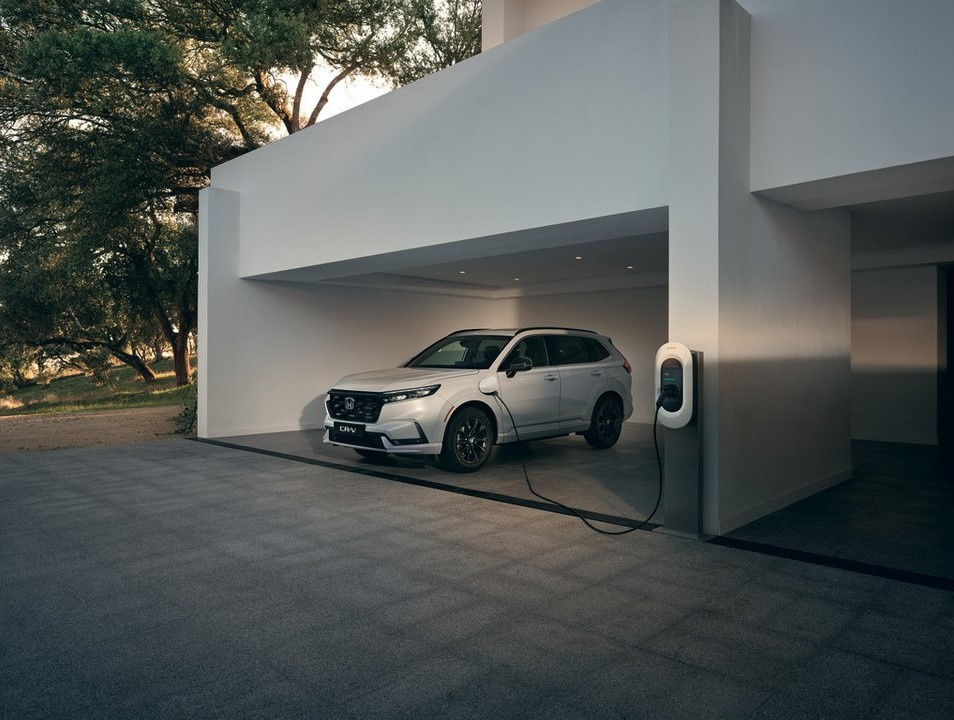
How far can a e:PHEV drive in electric mode?
One of the defining characteristics of a e:PHEV is its ability to drive short to medium distances using electric power alone. For many drivers, this can cover typical daily journeys such as commuting or local errands.
Electric driving range varies depending on factors such as driving style, temperature, and road conditions. Colder weather and sustained higher speeds may reduce electric range, while smoother driving can help extend it.
Once electric range is exceeded, the petrol engine automatically supports the vehicle, enabling longer journeys without the need to plan around charging availability.

What is it like to drive a plug-in hybrid
Quiet and smooth
When driving in electric mode, plug-in hybrids typically operate more quietly, particularly at lower speeds. When additional power is required, the petrol engine engages automatically, with transitions designed to feel smooth during everyday driving.
Effortless daily driving
For regular journeys, a e:PHEV manages power delivery automatically. This allows drivers to focus on driving rather than managing energy use, particularly in stop-start traffic or urban environments.
Flexibility for longer journeys
On longer journeys, the petrol engine supports the vehicle once electric power is reduced. This allows drivers to travel further without relying solely on charging infrastructure, combining electric and petrol power as needed.
Does Honda offer any plug-in hybrid cars?
Honda offers a plug-in hybrid version of the CR-V in the UK. This model illustrates how Honda applies plug-in hybrid technology in a practical, everyday vehicle.
The CR-V e:PHEV combines a petrol engine with a rechargeable battery, allowing electric driving for shorter journeys and petrol support for longer trips. Charging can be carried out at home or at public charging points, while the petrol engine enables continued driving when electric power is limited.
This approach reflects Honda’s focus on providing adaptable electrified options that suit a variety of driving patterns.