


As we emerge from the darker, colder months into Spring thoughts turn from hunkering down to visits to the garden centre, day trips to the coast and weekends away. Whatever your plans, the chances are you’ll be using your Honda – loading up garden waste to go to the rubbish tip, the kids for a walk with the dog or just your lunch and laptop for the commute to work.
With fuel costs rising it makes sense to maximise the use of your hybrid’s electric motor rather than the internal combustion engine to cut your fuel bill and now’s the perfect time to make sure your Honda is in tip-top condition and you’re getting the greatest efficiency you can. The good news is that with a few tweaks to your driving you can reap the rewards of increased fuel economy and reduced fuel costs.
So, let’s talk about ways you can make your Honda hybrid go further this Spring.
Five easy driving wins for better fuel economy
With the cost of petrol reaching record levels, it makes sense to ensure you’re using your Honda hybrid’s electric motor as much as possible, opposed to the petrol engine. These five simple tips cost nothing but could reduce your spend at the petrol pumps.
1. Go easy on the accelerator
Gentle acceleration and lower speeds will mean the electric motor is powering your car as much as possible, rather than the petrol engine – aggressive acceleration increases the power needed and forces the engine to kick in, so relax and anticipate the road more and gently increase your speed.
2. Anticipate the road
Gentle braking where you anticipate stopping rather than jumping hard on the brakes is the most efficient way to drive. Not only does it use less fuel and energy versus repeatedly slowing and accelerating, but your hybrid will make the most of regen, where the electric motor converts the kinetic energy from your brakes into electricity that is fed back into your battery. Afterall, who doesn’t love free energy?
3. Steady speeds
The electric motor works best in urban traffic but at higher speeds on a dual carriageway or motorway, where the engine kicks in, it’s more efficient to maintain a constant speed where possible.
4. Choose econ mode
Econ mode raises the threshold at which the engine provides additional power compared to normal or sport modes, so you might notice it’s a bit slower to accelerate, with reduced responsiveness, which will improve your driving efficiency.
5. Journey plan
Hybrids, like most cars, take a little time to warm up and reach peak efficiency, so combining your trips and errands into one journey helps make the most of your fuel and battery. Not only will you save petrol, but you’ll also save yourself some precious time too.
Technology at your fingertips
Every Honda hybrid is designed for maximum efficiency so why not keep an eye on how efficiently you’re driving by viewing the power flow monitor. Found on the central Honda CONNECT screen, it displays a real-time visualisation of how the system is operating, showing whether the power source is the electric motor, hybrid or the petrol engine, as well as your fuel economy and battery range. Just one of the many smart features to help you get the most from your Honda.
Simple vehicle checks for hassle-free driving
Here’s a quick checklist you can do today to help your hybrid go further this Spring that will take less than 15-minutes to do.
Check your tyre tread
Balding tyres are extremely dangerous as the reduced grip causes longer braking distances and risk of blowouts. In the UK 1.6mm is the legal minimum amount of tread you must have on each tyre, but many motoring experts recommend you get replacements when they’re down to 3mm.
The easiest way to check how much tread is on your tyres is to grab a 20p coin and insert it into a groove in the centre of your tyre – you shouldn’t be able to see the border of the coin at all if you have enough tread.

Check your pressures
As the seasons change it’s important to check the pressures of all four tyres as warmer weather naturally increases the pressure. Over-inflating your tyres can reduce your traction, cause uneven wear and lead to increased damage from potholes, whilst underinflating causes rolling resistance and reduced range. For ultimate handling and fuel efficiency make sure the tyre pressures match the pressures shown in your handbook or inside the driver’s door edge.

Brake check
Whilst your Honda hybrid has a brake warning system, it’s good practice to routinely check to make sure your brakes feel responsive when you apply pressure and that the brake fluid level is as it should be.
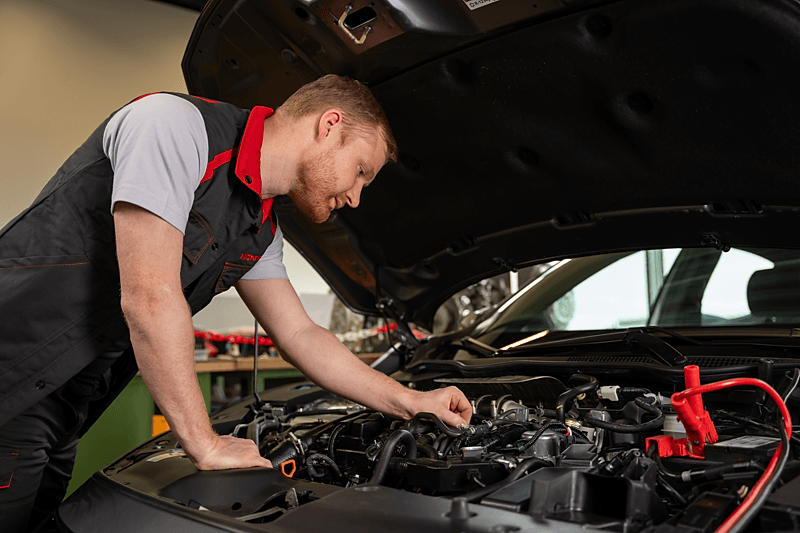
With the engine off and cold, just pop open the bonnet and look for a small translucent plastic tank at the back of the engine bay, near the windscreen, normally on the lefthand side. It should have a black cap labelled ‘brake fluid’. Check the visible level is between the MAX and MIN lines.
Empty the boot
It may sound simple but removing any unwanted items will reduce your hybrid’s weight and improve the range. Carrying around heavy items such as golf clubs, bikes or prams, when they’re not needed, will negatively affect your fuel economy.

Visual check
Walk around your car and check that all the lights and indicators are working correctly. Whilst it won’t help your fuel economy it will keep you safe and legal.

Service check
Your Honda hybrid will remind you when your next service is due, but you can double check by viewing the service reminder screen on your dashboard. With the power on, use the selector wheel on the right side of the steering wheel to jump to the maintenance information. It will show you the predicted number of days before the service is needed.
The good news is that when you take your car to be serviced at a Honda service department, our expertly trained Honda technicians will also carry out a complimentary 34-point visual Safety Check.
Your daily e:PHEV weekday routine
If you have a plug-in hybrid (e:PHEV), such as the CR-V, charging it each night will probably mean that you can do most of your day-to-day local driving without using any petrol at all.
With local, urban, low speed journeys such as the school run, trips to the gym or shops, chances are your hybrid will be able to take full advantage of the battery and electric motor, if you avoid sudden acceleration, sharp inclines and higher speeds. For longer, higher speed journeys such as motorway driving and day trips, the petrol engine can take over, with the hybrid seamlessly kicking in as you brake and slow down.
Automatically plugging in your CR-V e:PHEV when you get home and letting it charge overnight, even if the battery isn’t low, is best practice for e:PHEVs as they benefit from frequent, small charges due to their smaller battery.
Don’t forget if you use Honda e:PROGRESS, Honda’s intelligent charging solution that connects your Honda vehicle with any tariff and charger, you could save money on your electricity bill too.
If you’re not yet driving a Honda hybrid but are considering one, this blog gives you the lowdown and answers some common hybrid FAQs. For those who are already enjoying the benefits of hybrid driving why not speak to your local Honda retailer about a Spring hybrid health check?