


Company Cars
Which Honda vehicle is for you?
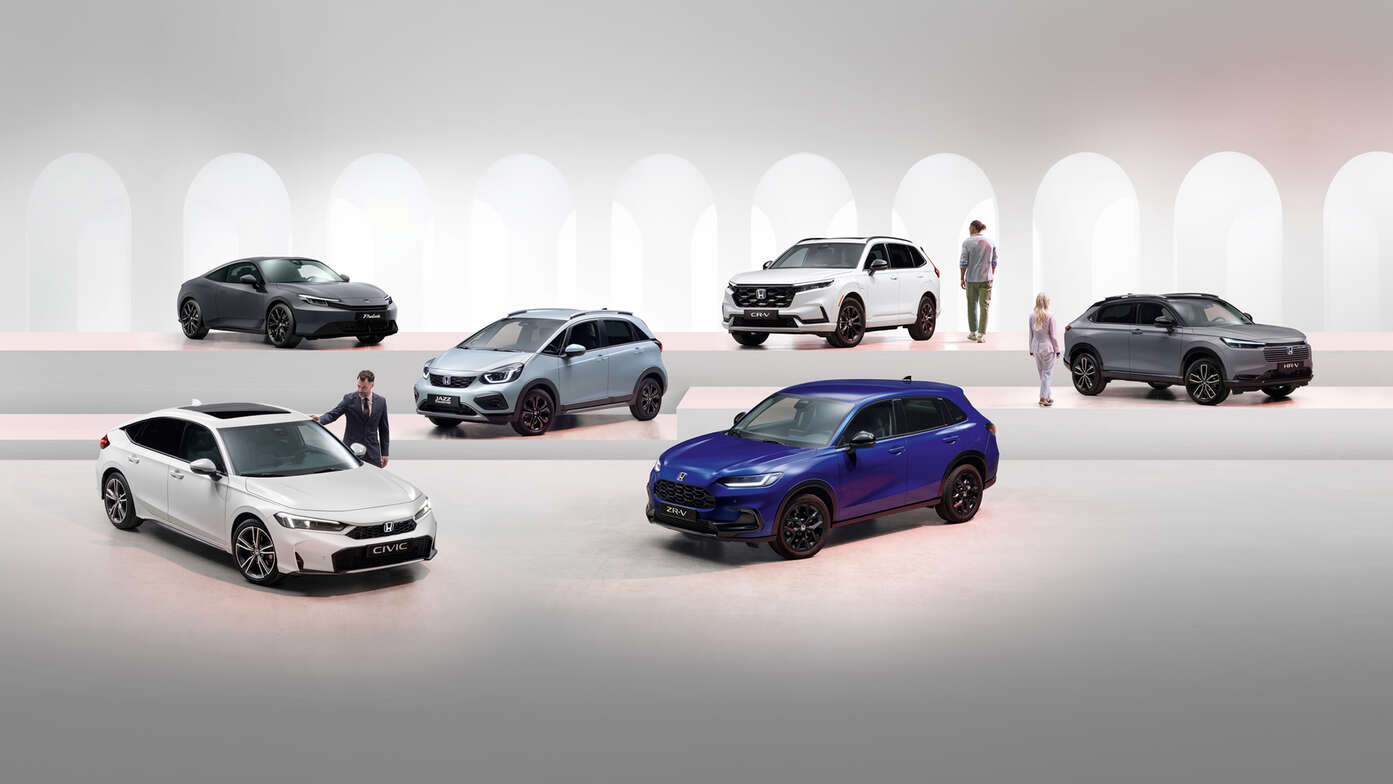
Meet the full range.
Honda HR-V

Self charges - no need to find a charging station
Driving range of 460 miles on a full tank
Excellent for urban driving and commuting
P11D from: £31,755
CO2 from: 122g/km
BIK from: 30%
Honda CR-V
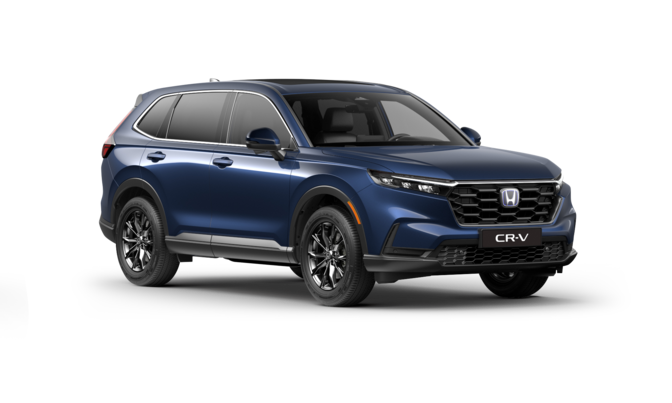
Self charges - no need to find a charging station
Driving range of 590 miles on a full tank
Excellent for urban driving and commuting
P11D from (PHEV only): £49,765
CO2 from: 18g/km
BIK from: 9%
Pure Electric Driving (P:HEV only): 50 miles
Honda ZR-V

Efficient full hybrid technology delivering 184ps of power and a combined range of up to 621 miles
A boot capacity of 1,322 litres
5.7L/100KM combined fuel economy
A refined cabin space for ultimate comfort
P11D from: £35,500
CO2 from: 130g/km
BIK from: 32%
Honda Civic

Self charges - no need to find a charging station
Driving range of 521 miles on a full tank
Offers 4 driving modes to suit your preference
Excellent for urban driving and commuting
Up to 1,220 litres boot capacity
Class-leading cabin space with soft-touch materials for a modern finish
P11D from: £33,350
CO2 from: 108g/km
BIK from: 27%
Honda Jazz

Self charges - no need to find a charging station
Advanced hybrid technology effortlessly switches drive modes
All grades come with the latest in-car technology, entertainment system and connectivity
Excellent for urban driving and commuting
Advanced Honda SENSING safety array as standard
P11D from: £27,615
CO2 from: 102g/km
BIK from: 26%

Company Cars Benefit-In-Kind Tax
The Benefit-in-Kind (BIK) tax system for company cars clearly incentivises the selection of zero or low tailpipe emission cars with a high battery range.
BIK rates are determined by a vehicle’s CO₂ emissions and its all-electric range.
Zero-emission cars (fully electric) currently attract a 2% rate in 2024/25, rising to 3% in 2025/26, then increasing by 1% annually to 5% by 2027/28, and further to 7% and 9% by 2028/29 and 2029/30.
Plug-in hybrids emitting 1–50g/km CO₂ with an electric range over 130 miles follow the same progression: 2% in 2024/25, 3% in 2025/26, then gradually up to 9% by 2029/30.
Other hybrids and petrol/diesel cars have higher rates, capped at 37% for vehicles over 170g/km CO₂.
This phased increase gives businesses and drivers a clear roadmap for planning fleet choices while reinforcing the shift toward cleaner vehicles
Phase-out of new petrol and diesel car sales in 2030
The Government has set the phase-out date for new petrol and diesel cars for 2030, with all new cars and vans to be fully zero-emission when driving by 2035.
The move is underpinned by a commitment of over £1.8 billion to support greater uptake of zero tailpipe emission vehicles for greener car journeys.
Between 2030 and 2035, new petrol and diesel cars and vans can be sold only if they have the capability to drive a significant distance with zero tailpipe emissions, for example plug-in hybrids, with the exact models to be defined at date of publication.
See table below, for a summary of low emission tax bands:
BIK tax bands for new zero
and low CO₂-emitting cars
0
Get in touch
Our dedicated experts will be happy to take you through all of the many ways Honda can help you.